
Loading languages…
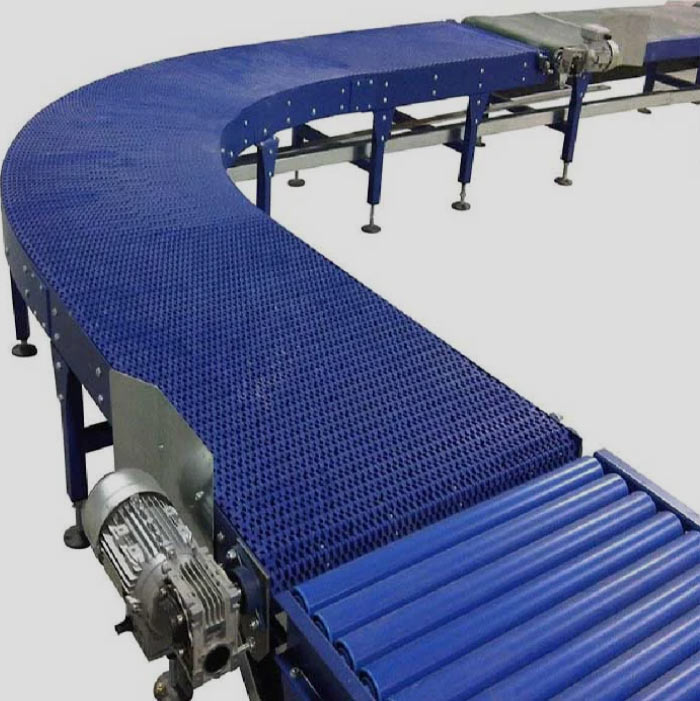


A conveyor system is the backbone of any factory, warehouse or plant that moves material every day. Done well, it runs for years with little attention. Done badly, it becomes the bottleneck everyone works around.
Avenue Automation engineers and manufactures complete conveyor systems for buyers in Dubai and across the UAE. We design for your layout, product and throughput, and we build to ISO 9001:2015 certified processes.
Our scope runs from a single 3 metre belt conveyor to multi-section systems with drives, controls and safety interlocks.
A conveyor system is a combination of belts, rollers, chains or other carriers, together with frames, drives and controls, that moves products between two or more points without manual carrying. Systems can be horizontal, inclined or declined, and may include curves, merges, diverters and elevators.
The right system depends on what you move (boxes, bags, bulk material, pallets), how fast, how far, and in what environment. A bakery needs washdown stainless steel, a coal handling plant needs steel cord belting and flameproof electricals, and a warehouse may need modular, expandable sections.
We handle most of the work in-house, which lets us control quality and make changes quickly.
The main types and their typical uses are listed below. We can combine several in one line.
The table covers our heavy-duty industrial range. Light-duty warehouse systems follow a different specification, which we provide on request.
| Category | Specification |
|---|---|
| Capacity & Performance | Conveyor speed: customizable (0.5–3.0 m/s); Total load capacity: up to 5000 kg; Volumetric throughput: as per material type and belt width |
| Conveyor Belt/Chain | Steel Cord Belt: ST 630, width 800–1400 mm, 3 cords, 114 mm cord pitch Chain Conveyor: Two-track, 14.2–19.0 kg, 63.5 mm pitch, EN 8 material |
| Structural & Drive System | Frame: ISMC 125/150 stringers with ISA 50x50x6 'N' cross bracings Motor: 15 kW (Y160L—4) or 3-phase options for higher loads Drive Location: Head/End drive |
| Rollers & Components | Bottom Roller: 1000 mm, carbon steel 40C8, 6205 ZZ bearings Sprockets: 14/8 teeth, bore diameter 65/60 mm |
| Environmental & Safety | Dust seals: Nylon 6 Electricals: FLP (Flameproof) options Certifications: ISO 9001:2015 |
| Dimensional & Structural Standards | Belt width: 800–1400+ mm Length: Customizable (e.g., 10,000–12,000 mm) Standards: DIN 22131, AS1333, IS 15427, ISO 15236 |
A well-designed conveyor system pays back in labour, speed and safety.
Our customers span many sectors across the UAE.
Before you ask for a quote, gather this information.
Our customers choose us because we engineer solutions, not just sell equipment.
We make roller, belt, chain, slat, screw, overhead and modular conveyors, as well as bucket elevators and food-grade systems.
Yes. Send us a sketch or drawing, and we will propose a layout with sections, drives and controls.
A belt conveyor carries items on a continuous belt, suited to small or irregular items and bulk. A roller conveyor carries rigid, flat-bottomed items on rollers, and can be gravity or powered.
Yes. Stainless steel frames and belts are available for food, pharma and washdown areas.
Delivery depends on size and complexity. We give a firm lead time with the quotation.
You may also want to look at material handling conveyors | flexible roller conveyors | telescopic conveyors | truck loading conveyors.
Planning a new line or upgrading an old one? Contact Avenue Automation and we will design a conveyor system for your site in Dubai.